
If you spend most of your day at a desk, small posture and setup changes can make a big difference to how your neck, shoulders and lower back feel by 5pm. Here are seven of the changes we recommend most often at APEX. Chiro Gregory Hills.
Why posture matters
No single position is inherently 'bad', but holding any position for hours on end can leave joints and muscles feeling tight, achy or fatigued. Poor ergonomic setup often nudges the body into positions — forward head, rounded shoulders, slumped lower back — that add unnecessary load over time.
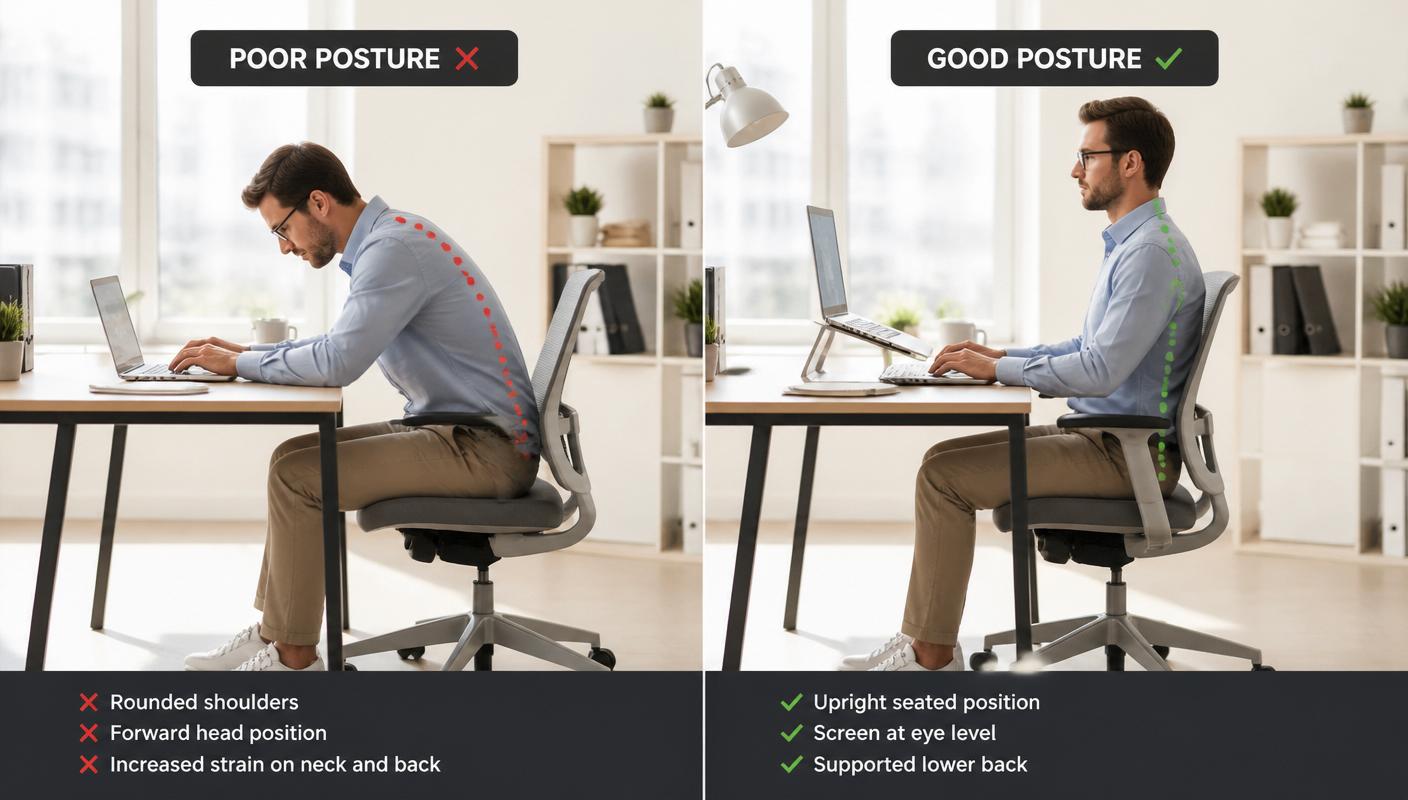
Common symptoms of poor desk posture
- Neck and upper-back tightness by the end of the day
- Shoulder tension and headaches
- Lower back ache after long stretches of sitting
- Wrist, forearm or eye fatigue
1. Set your screen at eye level
The top of your monitor should sit roughly at eye height, about an arm's length away. This helps stop your head from drifting forward, which is a common driver of neck and upper-back tension.
2. Support your lower back
A small lumbar cushion, or a chair with adjustable lumbar support, helps maintain the natural curve in your lower back.
3. Keep your feet flat
Feet flat on the floor, knees at roughly 90 degrees. Use a footrest if your chair is too high.
4. Move every 30–40 minutes
No posture is a good posture if you hold it for hours. Set a timer, stand up, stretch, walk to the kitchen — anything that resets your spine.
5. Bring the phone up, not the head down
'Text neck' is real. Hold your phone at chest or eye height whenever you can.
6. Build strength in the right places
Mid-back, glute and core strength support good posture far more than trying to consciously 'sit up straight' all day.
7. Get regular check-ups
Small joint restrictions and muscle imbalances are often easier to address early. A regular chiropractic check-up helps keep things moving well between flare-ups.
When to seek professional advice
If desk-related discomfort is persistent, worsening, or affecting your sleep or ability to work, it's worth having your setup and movement patterns properly assessed.
If you're experiencing similar symptoms or would like to better understand what's contributing to them, book an assessment at APEX. Chiro Gregory Hills. We're here to listen, assess your concerns and help you make informed decisions about your care.