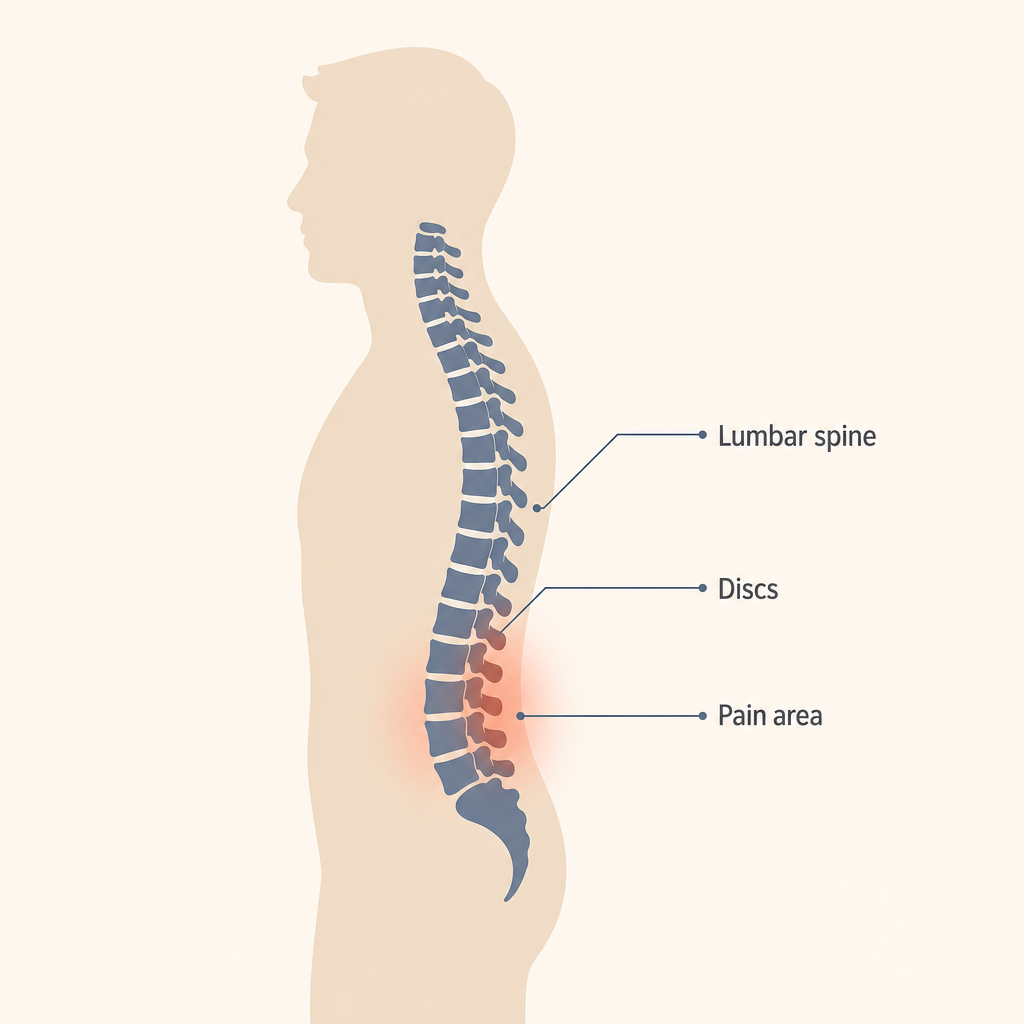
Disc injuries may be associated with back pain, neck pain and symptoms that travel into the arms or legs. Many people improve with time and appropriate conservative management, although recovery varies. Understanding your symptoms and what may be contributing to them is often an important first step.
What is a disc injury?
Intervertebral discs sit between the vertebrae of your spine. They help absorb load, support movement and provide space between the spinal bones. The term 'disc injury' may describe irritation or changes affecting a spinal disc, including:
- Disc bulges
- Disc herniations
- Tears affecting the outer part of the disc
- Age-related disc changes
- Disc-related inflammation or sensitivity
Disc changes do not always cause pain. Bulges and other changes are also commonly identified on scans in people without symptoms. Imaging findings should therefore be considered alongside your symptoms, health history and physical examination.
Possible symptoms
Symptoms vary depending on the location of the disc and whether nearby nerves are affected. Possible symptoms include:
- Localised lower back or neck pain
- Sharp, aching or burning discomfort
- Pain travelling into an arm or leg
- Tingling or numbness in an arm, hand, leg or foot
- Weakness in an arm or leg
- Symptoms aggravated by bending, lifting or prolonged positions
- Muscle tightness or guarding around the painful area
These symptoms can have several possible causes and do not necessarily mean you have injured a spinal disc. An individual assessment is needed to better understand what may be contributing.
How do disc-related symptoms develop?
There is not always one identifiable cause. Symptoms may begin after bending, lifting, twisting, sudden loaded movements, or they may develop gradually. Age-related changes, previous injuries and other individual factors may also influence how the spine responds to activity. Prolonged sitting and repetitive activities may aggravate symptoms for some people, but this varies between individuals.
How we assess disc-related symptoms
A chiropractic assessment at APEX. Chiro Gregory Hills may include:
- A detailed discussion about your symptoms and health history
- Assessment of spinal and general movement
- Orthopaedic testing
- Neurological checks, including reflexes, strength and sensation where relevant
- Screening for symptoms that may require medical investigation
The purpose of the assessment is to understand your presentation, identify factors that may be contributing and determine whether chiropractic care is appropriate for you.
Do disc injuries require an X-ray or scan?
Most back and neck pain presentations do not require imaging. X-rays may be considered when your history or examination identifies a valid clinical reason for further investigation. If X-ray is clinically indicated, we will explain why it is being considered and discuss the most appropriate pathway. Scan findings should always be interpreted alongside your symptoms and physical examination.
General management considerations
Depending on your symptoms and individual circumstances, general advice may include:
- Remaining gently active and avoid prolonged bed rest
- Temporarily modifying activities that significantly aggravate symptoms such as heavy lifting or long periods of sitting
- Use heat or ice for short-term comfort during symptoms flare, where appropriate
- Following an individualised movement and rehabilitation plan
When to seek professional advice
Consider speaking with a healthcare professional if symptoms are worsening, keep returning, are not improving, or are affecting your sleep, work, or usual activities. Seek urgent medical care if you experience new or rapidly worsening weakness, numbness in the groin area, difficulty starting or controlling urination, or any loss of bladder or bowel control.
How chiropractic care may help
At APEX. Chiro Gregory Hills we take time to understand your history, assess how you move and explain what may be contributing to your symptoms. Chiropractic care may help manage disc-related symptoms by supporting movement, helping reduce pain and assisting you in returning to normal activities. Depending on your assessment, we will discuss whether chiropractic care is appropriate for you.
The information on this page is general in nature and is not a substitute for individual healthcare advice.